After you’ve determined your SEO keywords (that is, the phrases for which you want your site to be found on Google Search), your next obvious task is to get your website to show up as high in the Google Search rankings as possible for each keyword phrase.
Which begs the question: who else is optimising for those same keywords? Not to mention, how can you oust them in the rankings? Here’s a quick guide to getting started with SEO competitor analysis.
1. Identify Your SEO Competitors
Armed with your trusty list of keyword phrases, search for each one on Google and make note of all the sites that show up in the Top 10.
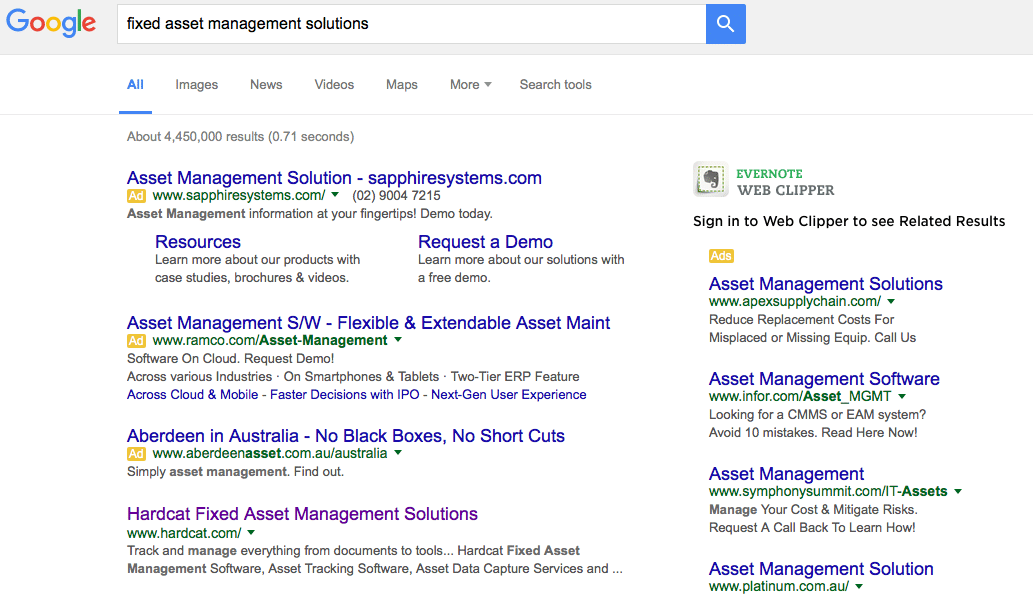
Many of these are your competitors. Sites that are likely not your competitors include:
- Major brands with millions in revenue and traffic (e.g. Macy’s, Apple)
- Companies targeting a different location than you are
- Companies that aren’t selling the same products or services that you are
Also make note of the sites that rank for multiple of your keyword phrases. These are your top competitors.
2. Conduct SEO Competitor Analysis
Next, it’s time to determine what your competitors are doing in order to rank highly for their keywords. It’s important to note that there’s no one SEO recipe to follow in order to rank in the Top 10, so each of your competitors is likely employing a different SEO strategy. By analysing each one, you can take bits and pieces from every competitor and devise your own unique SEO strategy.
On-Page Optimisation
The foundation of your SEO strategy should be on-page optimisation. It’s the element you have the most control over, and depends primarily on how much effort you put into it and how well you implement these tactics. If you invest time and/or resources in both learning proper on-page optimisation techniques and implementing them, you’re well on your way to climbing the Google search rankings.
Browse your competitors’ websites and observe their SEO on-page optimisation strategy. Have they used keywords in all of the elements below?
- Title tag – What text are they including in their title tag (i.e. the text visible in the browser tab)> Is there a certain phrase they include in each title tag, or do they use a variety of repeated phrases? Do they include this phrase at the start, middle, or end of the title?
- Page Headers – Are headers and subheaders included on each page? How many, and what type? (e.g. h1, h2, … h5)
- Page Content – How much text is on each page? Are there certain keyword phrases repeated throughout?
- Images – Do they include images on any of their pages? What filenames do these images have? Have they included any alt tags in their image code?
- Meta Descriptions – What does the description blurb say on Google when the site comes up in search? Is it an excerpt from the site, or a carefully-written blurb summarising the page content?
- Links – Do they include links on any of their web pages? Are they internal (links to another page within their site) or external (links to some other site)?
Backlinks
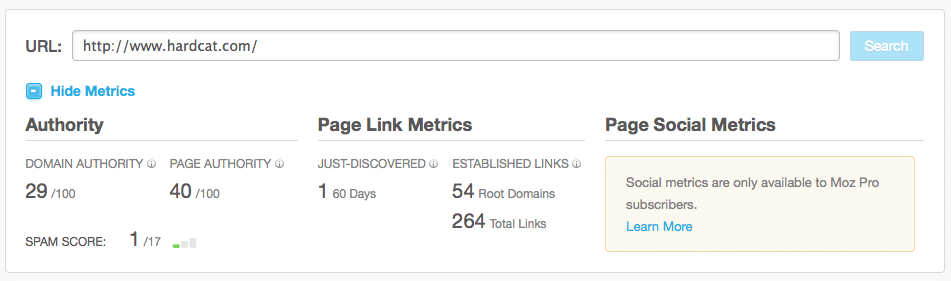
No recipe for SEO success is complete without including some off-page optimisation, namely by acquiring backlinks to your site. A backlink is a link to your site from another site, which is ideally of high domain authority. (For tips on how to formulate SEO link building strategies, we recommend perusing Backlinko).
There are a few backlink checker tools out there, but the best free one is Moz’s Open Site Explorer, which you can use just by plugging in the domain of your competitor.
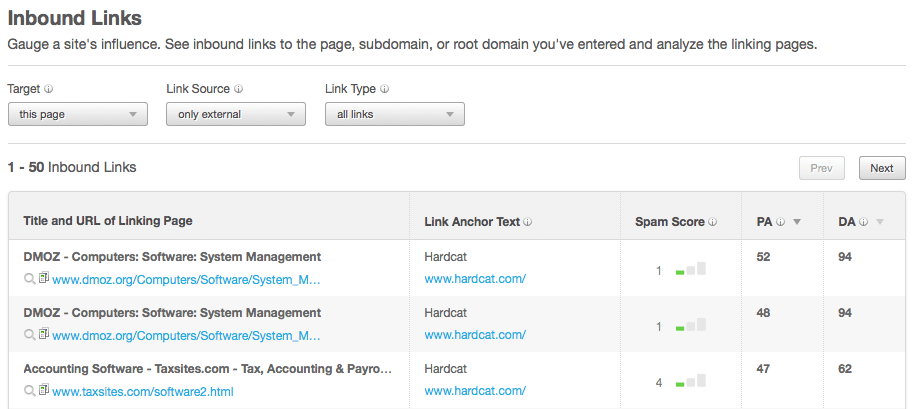
Of the backlinks that your competitors have acquired, are they:
- A guest post on other websites or blogs?
- A mention or feature on other websites?
- From a comment left on an article or forum?
- On a website from a similar or different industry?
- On a website with high domain or page authority?
Social Media
Odds are, your competitors are also using social media to improve SEO and drive more traffic to their website. In your competitor analysis, take the time to check out your competitors’ accounts on Facebook, Twitter, Pinterest, Google +, and Instagram and observe the following:
- Which social media platforms are they using?
- How often do they post social media updates?
- What sort of content do they share?
- What is their engagement like? (likes and comments per post vs. total number of followers)
- How many followers do they have vs how many accounts are they following?
For more information on how to succeed with SEO, check out these other articles we’ve written: